The Future of Business: How AI and Automation Are Changing the Game
Futuristic businesses prioritize innovation, adaptability, and advanced technologies to remain competitive in an evolving market. These businesses leverage tools like artificial intelligence (AI), machine learning, automation, blockchain, and the Internet of Things (IoT) to enhance efficiency, scalability, and customer satisfaction. Characteristics of futuristic businesses include data-driven decision-making, a focus on sustainability, and the ability to predict and meet consumer needs through flexible, forward-thinking approaches.

Example
Companies like Tesla and Amazon exemplify futuristic business concepts by employing AI to automate tasks, adopting renewable energy, and creating personalized experiences that revolutionize their industries.
How AI Is Changing the Future of Business
Market Trend Predictions: AI enables futuristic businesses to forecast market trends using predictive analytics.
Personalized Customer Experiences: Recommendation systems powered by AI allow for hyper-personalized consumer interactions.
Improved Innovations: AI enhances research and development (R&D) efforts, fostering groundbreaking products.
Streamlined Decision-Making: Businesses benefit from data-driven, faster strategic insights.
AI's sweeping capabilities impact industries such as healthcare, transportation, and finance, where it enables tasks like fraud detection, improved diagnostics, and autonomous systems.
AI and the Economy:
AI is projected to contribute $15.7 trillion to the global economy by 2030, reshaping how futuristic businesses compete and innovate at scale.
How Automation Is Reshaping Business Processes
Automation is revolutionizing futuristic business operations by eliminating manual, repetitive tasks and enhancing productivity. Key areas of transformation include:
Supply Chain Management: Robotics and real-time monitoring systems streamline inventory, order fulfillment, and logistics.
Administrative Tasks: Tools like Robotic Process Automation (RPA) handle data entry, invoice processing, and compliance tasks, reducing human error and labor costs.
Customer Engagement: Chatbots and virtual assistants automate responses and improve customer interactions with faster, 24/7 service availability.
By reducing costs and speeding up processes, automation ensures scalability and positions businesses for long-term competitiveness.

Tip
Explore tools like Zapier, UiPath, or Salesforce to streamline workflows in futuristic business operations.
The Role of AI in Futuristic Business Models
AI drives futuristic business models by providing real-time personalization, scalability, and operational agility. AI enables hyper-personalized services by analyzing consumer preferences and behaviors, contributing to improved customer retention in subscription-based or on-demand services. Businesses also use AI-driven platforms to connect suppliers, consumers, and systems, creating seamless ecosystems.
Netflix, a leader in futuristic business practices, uses AI to recommend content based on viewing habits and engagement, exemplifying how businesses can innovate through data-driven, customer-centered approaches.
Lastly, AI supports sustainability efforts, optimizing energy use and minimizing waste in production processes.
How Businesses Can Adapt to Automation Trends
Invest in Workforce Training: Equip employees in futuristic businesses with the skills to work alongside AI and automation technologies, fostering creativity and innovation.
Audit and Automate: Identify repetitive tasks within operations and implement RPA or other automation solutions.
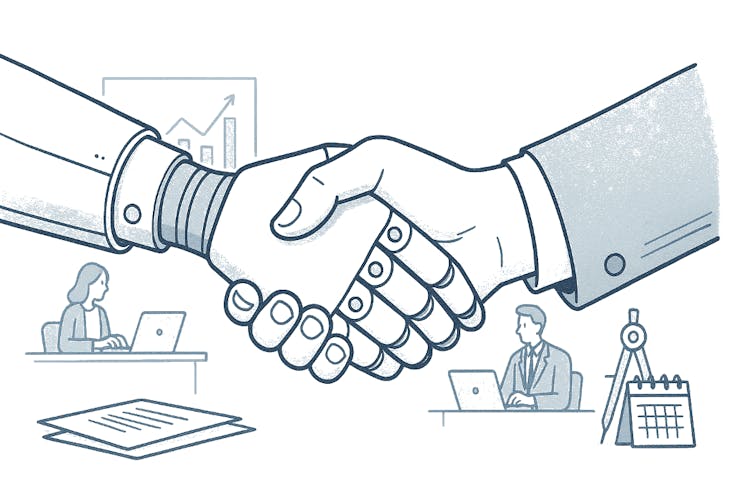
Adopt Human-AI Collaboration: Combine human creativity with technological precision to improve problem-solving capabilities.
Stay Agile: Regularly review automation strategies to scale tools and respond to evolving market needs.
Focus on Learning: Build a culture of continuous learning for staff to ensure long-term adaptability.
Tip
Encourage workshops and certifications in AI and automation technologies to future-proof your team’s skillsets in futuristic business environments.