Apps that boost your productivity

1. Todoist – Tasks Under Control
Todoist is a proven app for task planning and time management. It allows users to create projects, add subtasks, set priorities, and track progress.
The new version introduces an AI assistant that helps break down tasks, rephrase them, or suggest priorities.
Key features:
Free version: up to 300 active tasks
Integration with Google Calendar, Outlook, and Dropbox
Collaboration with up to 5 users in the free version
Todoist is ideal for those who value clarity and simplicity. Thanks to AI, it becomes a personal assistant that helps with prioritization and daily scheduling.
2. Trello – Visual Project Management
Trello is one of the most intuitive tools for managing projects. It uses boards and columns (kanban boards) where tasks can be moved, commented on, and enriched with attachments.
The built-in Butler tool automates repetitive actions such as assigning tasks or moving cards based on due dates. While AI features are not included in the core version, third-party integrations (e.g., ChatGPT for comment summaries or deadline predictions) can extend its capabilities.
Key features:
Free version: up to 10 boards, attachments up to 10 MB
Paid plans: unlimited boards, automation, advanced integrations
Available on web, desktop, and mobile
💡 Tip: Connect Trello with Slack to receive project updates directly in communication channels.

Trello highlights:
Clear visual task structure
Process automation with Butler
Integration with over 200 apps
Suitable for small teams or freelancers
3. Slack – Efficient Team Communication
Slack is a modern communication platform that largely replaces email. It allows users to create channels for projects, departments, or clients and share files in real time.
Slack continues to expand its native AI capabilities, offering tools that dokážou summarise discussions, generate meeting notes, enhance search, and create clear conversation overviews. These features are part of Slack AI, dostupné v rámci plánů Pro, Business+ a Enterprise.
AI capabilities can also be extended through third-party integrations and APIs—for example, using ChatGPT for automated responses or conversation analysis.
Key features:
Free version with limited message history
Premium plans: advanced search, more storage, multi-participant calls
💡 Alternatives: Microsoft Teams (for corporations) or Discord for Business (for smaller teams).

It’s recommended to regularly review user permissions in Slack, as most security issues arise from misconfigured access or third-party integrations.
4. Asana – Organized Team Collaboration
Asana helps teams plan, organize, and monitor projects. It offers task views by priority, deadlines, or calendar, and supports comments and file attachments.
Emails can easily be converted into tasks by forwarding them. The Workload module provides an overview of team capacity to prevent overload.
Key features:
Integration with Google Workspace, Slack, and Trello
Mobile app for on-the-go work
Advanced project reporting in paid versions
💡 Recommendation: Use the Workload feature to track your team’s load and adjust task distribution early.
5. Notion – Everything in One Place
Notion combines notes, databases, wikis, and project management in one tool. Users can create custom templates, share pages, and organize projects efficiently.
With Notion AI, you can generate text, summaries, outlines, and overviews. While AI is a powerful assistant for content creation and data organization, the outputs often require final human review.
Key features:
Sharing pages and templates
Combination of text, tables, and databases on one page
AI assistance for summarizing, outlining, and structuring content
💡 Tip: Create a personal work dashboard — calendar, tasks, and notes all neatly displayed on one page.
6. InvoiceOnline.com – Fast and Secure Invoicing
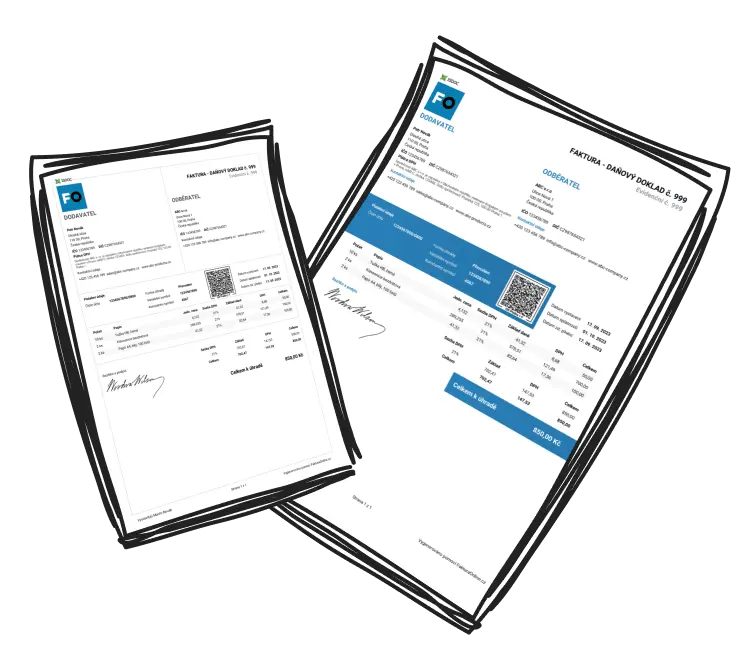
InvoiceOnline.com is a highly practical tool for entrepreneurs, offering fast and secure online invoicing. Once you fill in the invoice, the document is instantly ready for download in Adobe PDF format.
Key features:
All major document types (including VAT and non-VAT invoices)
Instant PDF download
Multi-language and multi-currency support
Secure and intuitive online interface
💡 Tip: Non-profit organizations can use InvoiceOnline.com for free.
Conclusion
Digital transformation continues to accelerate, and productivity tools are becoming increasingly interconnected. Current trends emphasize automation, AI assistance, and deeper app integrations that offer substantial time savings for entrepreneurs and small teams.
However, the foundation of success remains discipline — no app can save you on its own, but the right one can make your journey much smoother.

documents with easeCreate Document