How to Boost Your Productivity When Working from Home
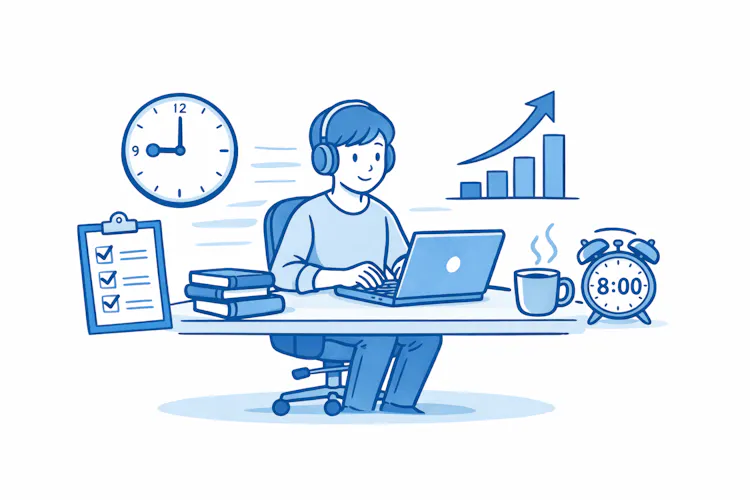
Set Up a Dedicated Workspace
Your brain links places with activities. When you work from bed or the couch, it gets a mixed signal — should it rest or focus? That's why you should carve out a fixed spot used only for work. A separate room is ideal, but a corner with a desk and chair works just fine.
The separation is both physical and mental. The moment you sit down at "your" work desk, you switch into work mode faster. And when the day is done, you simply leave the spot — which makes it far easier to unwind in the evening.

Build a Consistent Daily Routine
Without a clear start and finish, a workday at home easily bleeds into the late evening. Wake up at the same time, get dressed (no, pajamas don't count as work clothes), and start working at a set hour.
A "fake commute" helps too — a short walk around the block before you start replaces the trip to the office and gets your head in gear.
Work in Focused Blocks, Not All Day
Trying to work eight hours straight is counterproductive. Focus naturally rises and falls, so it makes sense to split your work into blocks. The best-known method is the Pomodoro Technique: you work in focused 25-minute stretches with a short 5-minute break in between.
Save demanding tasks that need deep focus (deep work) for when your mind is sharpest — for most people that's the morning. Leave admin, email, and invoicing for the afternoon, when your energy dips. If concentration is a struggle even in a quiet room, walk through specific techniques for how to stay focused while working remotely.

Example
Take Control of Distractions
At home, no one is watching — and that's the tricky part. Your phone, social media notifications, and "let me just quickly check my messages" can eat up hours. The most effective move is to remove the temptation before it starts: put your phone in another room, turn off notifications, and close distracting browser tabs.
Protect the Line Between Work and Home
When you live where you work, the boundaries blur fast. A laptop on the dining table tempts you to "finish just one more thing" in the evenings and on weekends. This is the single most common path to burnout for remote workers.

Don't Skip Breaks and Movement
Short breaks aren't wasted time — they're fuel for focus. Every hour, stand up for a moment, stretch, and look out the window into the distance (it gives your eyes a rest). A proper lunch break away from your desk restores your energy for the afternoon.
And move. Regular activity — even a brisk walk — measurably improves focus and mood. For productivity, it does more than another cup of coffee.
How many hours a day can you realistically work productively from home?
Most people can manage 4 to 6 hours of truly focused work a day. The rest usually goes to email, calls, and admin. What matters isn't the number of hours but the quality of your focus during work blocks.
How do you stay disciplined when no one is watching?
A fixed routine helps, along with clear daily tasks and short work blocks with breaks. Break big tasks into smaller steps — it's much easier to start a small one.
Is it better to work at the kitchen table or set up a dedicated corner?
Set aside a spot used only for work. Even a small corner with a desk and chair beats the kitchen table, because your brain links that space with work and switches into focus faster.
Does the Pomodoro Technique work for everyone?
It's a solid starting point, but adjust the intervals. Some people prefer longer stretches, like 50 minutes of work and a 10-minute break. Try what fits you.