Artificial Intelligence vs. Machine Learning: Key Differences Explained
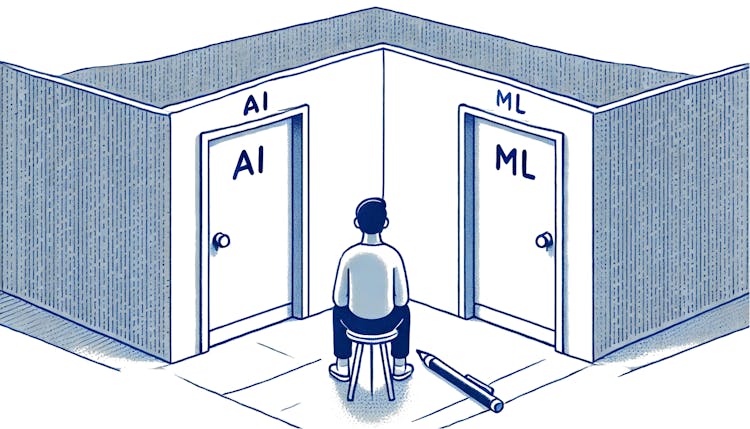
Artificial intelligence (AI) is the broader concept of creating systems that simulate human intelligence, such as reasoning, decision-making, and language understanding. Machine learning (ML) is a key element of artificial intelligence, emphasizing autonomous data-driven learning and improvement.
Comparison Table
Aspect |
Artificial Intelligence (AI) |
Machine Learning (ML) |
|---|---|---|
Definition |
Mimics human intelligence processes for decision-making and more. |
Uses data and algorithms to learn and make predictions. |
Scope |
Broad field, encompassing many methods like robotics and NLP. |
Narrow subfield within AI focused on data-driven learning. |
Key Objective |
Develop systems that think and act like humans. |
Train algorithms to identify patterns and improve over time. |
Approach |
Can use rule-based systems, robotics, or ML techniques. |
Relies purely on data and statistical models. |
Key Differences: Artificial Intelligence Versus Machine Learning
Artificial intelligence and machine learning differ tremendously in scope, purpose, and application. AI is the overarching goal of creating systems with intelligent behavior, while ML specifically focuses on algorithms that learn from data.
AI can operate without ML, leveraging rule-based methods like decision trees or symbolic logic. On the other hand, ML enables systems to autonomously improve by identifying patterns in historical data. For instance, an AI system might aim to detect fraud, but the ML component is what builds a predictive model to flag suspicious behavior.
Key distinction: AI = Goal-driven; ML = Data-driven.
Key Features of Artificial Intelligence vs. Machine Learning
Artificial Intelligence Features
Goal: Simulates human cognition and decision-making.
Capabilities: Handles reasoning, perception (e.g., image or speech recognition), and adaptability.
Techniques: Combines ML with rule-based systems or hard-coded algorithms.
Machine Learning Features
Goal: Uses data to predict outcomes and improve accuracy.
Processes: Includes supervised learning (with labeled data), unsupervised learning (finding patterns), and reinforcement learning (trial and error).
Specialization: Relies solely on datasets for training. Examples: recommendation engines or predictive analytics.
Why Understanding Artificial Intelligence and Machine Learning Matters
Understanding the difference between AI and ML is vital to effectively implement these technologies across industries. For example, businesses must assess whether they need general automation (powered by AI) or a data-driven system, like a machine-learning-powered chatbot, that evolves over time by grasping context.
This knowledge prevents misaligned expectations and ensures informed tech investments. As AI and ML reshape industries like finance, healthcare, and education, individuals equipped with this understanding can navigate the technological landscape and secure roles in cutting-edge fields.

Tip
Evaluate your business needs to decide between AI (rule-based automation) or ML (data-dependent models) for optimal results.
Can Artificial Intelligence Function Without Machine Learning?
Yes, AI can exist without ML. Traditional AI systems, such as expert systems and rule-based chatbots, rely on symbolic reasoning and fixed logic rather than dynamic algorithms. Early AI programs, like chess engines that used deterministic strategies, exemplify this approach.
Such methods are rigid, lacking the adaptability ML offers. However, AI doesn’t inherently require ML—it’s simply one method among others. ML has bolstered AI’s performance but is not essential for AI to function intelligently.
Conclusion: Bridging the Gap Between AI and ML
Artificial intelligence serves as the umbrella concept simulating intelligent behavior, while machine learning is a focused tool enabling smarter systems through data-driven learning. Grasping this distinction empowers individuals and businesses to effectively apply these technologies. Exploring both areas offers a roadmap to future innovation in an AI-powered world.
