How to Build a Self-Running Business and Reclaim Your Time
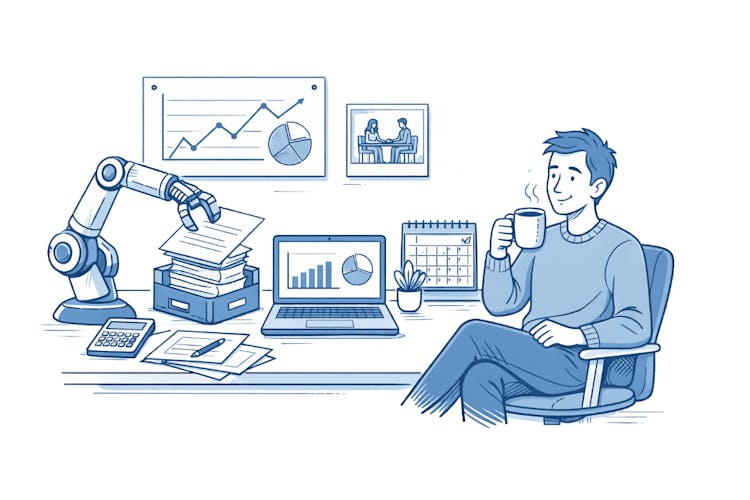
A self-running business, also referred to as an autonomous enterprise, operates independently of the owner’s constant involvement, supporting sustained growth and profitability with minimal daily oversight. Leveraging robust systems, advanced automation software, and a dependable team, a self-running business ensures seamless operations with minimal reliance on the owner.
Characteristics of a Self-Running Business:
Automation: Uses technology to handle repetitive tasks like bookkeeping, order processing, and client communications.
Clear Processes: Standard workflows and operating procedures keep everything consistent.
Strong Team: Delegated responsibilities ensure the owner is not the sole decision-maker.
Scalability: Growth isn’t limited by the owner’s time or input.

Example
Consider McDonald’s franchise model—a prime example of a self-sustaining business. With standardized processes for food prep, training manuals, and management accountability frameworks, McDonald’s ensures every location runs efficiently without constant involvement from corporate headquarters.
By building a self running business, you gain the freedom to focus on your vision and strategic growth rather than being consumed by daily tasks.
Why is it Important to Create a Self-Running Business?
A self-running business not only reduces stress but also boosts efficiency and ensures long-term sustainability without owner dependency. Here are the key benefits:
Reduced Stress: Alleviates the pressure of micromanagement.
Personal Time: Offers freedom to spend on personal or strategic goals.
Scalability: Enables growth without increasing complexity or workload.
Less Vulnerability: A self running business ensures operations persist seamlessly even in the owner’s absence.
Improved Team Productivity: Employees thrive under clear systems and autonomy.
Increased Resale Value: A business that works without its founder is more appealing to buyers.

Tip
Building a self-running business prevents common bottlenecks caused by over-reliance on the owner, freeing up time to focus on growth and new opportunities.
In essence, such a structure empowers entrepreneurs to work smarter, not harder, while paving the way for both personal freedom and financial growth.
How Can I Build a Self-Running Business?
The journey to a self-sustaining business starts with intentional planning and practical implementation of systems and delegation. Here are the steps to get started:
Define Your Goals: Determine the business objectives and the level of involvement you want to have.
Integrate Automation Tools: Implement software for tasks like customer management (e.g., HubSpot), accounting (e.g., QuickBooks), or project tracking (e.g., Trello). These technologies save time, improve accuracy, and reduce manual workload.
Hire and Train a Reliable Team: Surround yourself with skilled individuals who align with your vision. Train them thoroughly, delegate tasks, and empower them to lead.
Outsource Repetitive Tasks: Administrative duties, content creation, or customer support can be outsourced to trusted freelancers or platforms.
Document Processes: Develop Standard Operating Procedures (SOPs), checklists, and workflows for every major task. These ensure consistency and guide your team in your absence.
Monitor and Optimize Systems: Use metrics to evaluate performance and make adjustments as necessary.
Delegate Decision-Making: Appoint key managers who can independently oversee operations and resolve issues without relying on you.
For instance, an e-commerce store managing inventory automatically through software allows the owner to focus on marketing or product development rather than operational bottlenecks.
By consistently improving these systems, you’ll establish a business capable of operating independently while freeing you for higher-level priorities.
What Are the Key Steps to Make My Business Self-Running?
Here is a practical roadmap to transform your business into a self-sustaining model:
Identify Bottlenecks: Pinpoint the tasks that consume most of your time or require your constant attention.
Create Workflows: Document every significant process in your company.
Prioritize Delegation: Gradually hand over key responsibilities to your team or external partners.
Automate Workflows: Invest in tools that can automate repetitive work (e.g., invoicing).
Empower Leaders: Appoint team leaders or managers to streamline oversight and facilitate decision-making.
Test the System: Run trial periods where you step away from operations to see how well the business functions without you.
Step Back Gradually: Focus solely on strategic decisions, leaving day-to-day operations to your team.
Example
In a self running business model, a consulting firm with pre-trained staff and comprehensive onboarding materials can onboard clients seamlessly without the owner’s input, fostering consistent growth while minimizing dependency on the founder.
Follow these steps to create a streamlined system that runs effectively, regardless of your involvement.
How Does a Self-Running Business Help You Reclaim Your Time?
A self-running business shifts you from being a task-doer to a strategist, freeing up your most valuable asset—time. By automating processes, delegating responsibilities, and monitoring performance with metrics, you no longer need to micromanage daily operations.
This newfound time empowers you to focus on broader goals, whether that means strategic expansion, pursuing passion projects, or spending more time with family. For example, instead of handling every client email, you could dedicate time to launching a new product or simply enjoying a vacation.
“Time is the most valuable currency—investing in a self-running business gives you the freedom to focus on what truly matters.”