Pricing in business
Why Pricing Matters More Than You Think
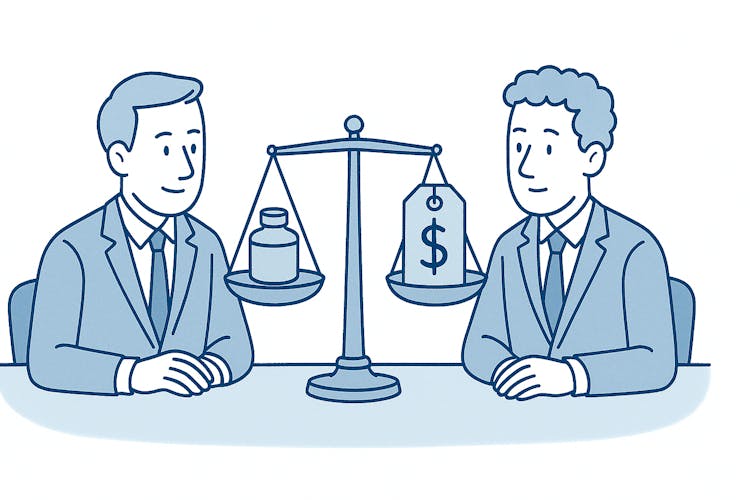
Pricing isn't just a number on an invoice — it shapes how customers perceive your business, determines your profit margins, and directly influences whether your company grows or stagnates.
Research has shown that a 1% improvement in price realization can translate to an 8–12% increase in operating profits. That's a far bigger lever than cutting costs or increasing sales volume. Yet many business owners set their prices once and never revisit them.

Pricing is not a one-time decision. Review your prices at least once a year - ideally in Q1, when business budgets reset and customers expect adjustments.
The Most Common Pricing Strategies
There's no one-size-fits-all approach to pricing. The right strategy depends on your industry, your costs, your competition, and what your customers are willing to pay. Here are the strategies used most often by small businesses and freelancers.
Cost-Plus Pricing - This is the simplest method: you calculate how much it costs to deliver your product or service, then add a markup for profit. For example, if it costs you $50 to make a product and you apply a 40% markup, you'd sell it for $70.
When it works best - Businesses with predictable, easy-to-calculate costs — such as manufacturers, retailers, or contractors.
The downside - It completely ignores what customers are willing to pay. You might be leaving serious money on the table if your product delivers value well above your costs.
Value-Based Pricing - Instead of basing your price on costs, you set it according to the value your product or service delivers to the customer. This approach looks beyond simple math and considers how customers perceive the benefits they receive.
Competitive Pricing - With this approach, you set your prices based on what your competitors charge. This can be effective if you're able to negotiate lower supplier costs or reduce operational expenses, but it can be difficult to sustain for smaller businesses due to thinner margins.
Penetration Pricing - You start with a deliberately low price to attract customers quickly, then raise prices later once you've built a customer base. This is common for new entrants in competitive markets — think of a new app offering a free or heavily discounted launch period.
How to Choose the Right Pricing Strategy
Picking a pricing strategy isn't about theory — it's about your specific business situation. Here's a practical framework:
Know your costs inside and out - Before you can price anything, you need a clear picture of your fixed costs (rent, salaries, software) and variable costs (materials, shipping, transaction fees). If you don't know your break-even point, you're guessing.
Understand your customer - What problem are you solving? How much is that solution worth to them? Survey your customers, look at competitors, and test different price points.
Analyze the competition - You don't have to match their prices, but you need to understand where you stand in the market. Are you offering more value? Less? Something different entirely?
Match the strategy to your goals - Trying to gain market share quickly? Penetration pricing might work. Want to position yourself as a premium option? Price accordingly. Selling a subscription product? Tiered pricing is probably your best bet.

There's no rule that says you can only use one strategy. Many successful businesses combine approaches - for example, cost-plus pricing for commodity products and value-based pricing for custom services.
How to Raise Prices Without Losing Customers
At some point, every business needs to raise prices. Costs go up, your skills improve, your product gets better. The fear of losing customers holds many business owners back - but the data tells a different story.
A 2025 consumer survey found that 90% of subscribers noticed price increases, but 58% accepted the increase when the value was clearly communicated. In other words, it's not the price hike itself that drives people away — it's poor communication. Here are practical steps to raise your prices the right way:
Give advance notice - Notify customers 30–60 days before a price change takes effect, using clear language like "pricing adjustment" rather than alarming phrasing. This gives them time to plan and shows respect.
Keep increases gradual - Small, incremental increases of 3–5% are generally much easier for customers to accept than large, sudden jumps.
Tie the increase to value - When you announce a price increase alongside new features, improvements, or expanded services, customers can clearly see what they're getting in return.
Don't apologize excessively - Business owners who over-apologize for a price increase often end up signaling that it isn't justified — which makes customers more likely to push back.

The customers most worth keeping are the ones who value what you do and expect periodic price adjustments. If someone leaves solely because of a modest, well-communicated increase, they likely weren't your ideal customer anyway.
Conclusion:
Pricing isn't something you figure out once and forget about. It's an ongoing process that evolves alongside your business, your costs, and your customers' expectations.The most important takeaway? Don't default to the lowest price just because it feels safe. Competing on price alone is a losing game for most small businesses. Instead, focus on understanding the value you deliver, choose a strategy that reflects that value, and don't be afraid to adjust your prices as your business grows.
documents with easeCreate Document