Past-Due Invoice: What to Do When a Client Doesn't Pay

An invoice is past due the first day after the due date passes and the money still isn't in your account. From that point on, you have options—but in the US, most of them depend on what you agreed with the client in advance. The sooner you act, the better your chances of getting paid.
When is an invoice past due?
The due date on the invoice decides it. A common default is Net 30—payment due within 30 days—but there's no automatic statutory term in the US, so it only counts if you set it. Whatever terms you use, state them clearly on the invoice and in your contract.
The day after the due date, the payment is late. Here's the key difference from Europe: in the US there's no automatic statutory interest that kicks in on its own. Your right to charge anything extra comes from two places—your contract and your state's laws.
What you can charge, and when
You can charge a late fee or interest on an overdue invoice, but generally only if the client agreed to it before the work started. That means spelling it out in your contract and repeating it on the invoice itself. Without that prior agreement, a late fee is hard to enforce if the client pushes back.
How much you can charge is capped by each state's usury laws. A widely used rate is 1.5% per month—about 18% a year—but the legal maximum varies from state to state, so check yours before you set a number. You can charge a flat late fee (a fixed amount that stays the same each period) or interest (which accrues on the unpaid balance). Keep it reasonable and proportional to the debt, not a penalty.

Charging late fees in the US (general guidance):
• Late fees and interest are not automatic—you can charge them only if the client agreed in advance. State the policy in your contract and on the invoice.
• A common rate is 1.5% per month (about 18% per year), but maximums are set by each state's usury laws—check your state before setting a rate.
• Flat late fee vs. interest: a flat fee stays the same each period; interest accrues on the unpaid balance.
• There's no federal statutory interest or fixed recovery fee like in the EU—your rights come from your contract and state law.
Rules vary by state—confirm local limits before applying any fee. This isn't legal advice.

Your contract and invoice state a 1.5% monthly late fee. A client owes $2,000 and pays 30 days late.
The fee is $2,000 × 1.5% = $30 for that month.
If they reach 60 days late, that's another $30 under a flat monthly fee—so decide up front whether your policy adds a flat fee each period or compounds, and apply it consistently.
How to collect, step by step
Double-check the invoice. Make sure it actually reached the client and the details are right. Payments often stall over a wrong account number or a missing reference.
Send a reminder. The first one is usually friendly—a nudge that the invoice is past due. If the client doesn't respond, follow up with a firmer notice that spells out any late fee.
Send a formal demand letter. If reminders don't work, a written demand states the amount owed, any fees, and a final deadline to pay before you take further action.
Escalate. Options include a collection agency, selling the invoice to a factoring company, or filing in small claims court (dollar limits vary by state).
Don't wait too long. The time limit to sue on an unpaid invoice—the statute of limitations—is set by state law and commonly runs three to six years from the due date.

Handling past-due invoices in InvoiceOnline
In InvoiceOnline, a past-due invoice is easy to spot—filter your invoice list by status to see exactly which ones need attention.
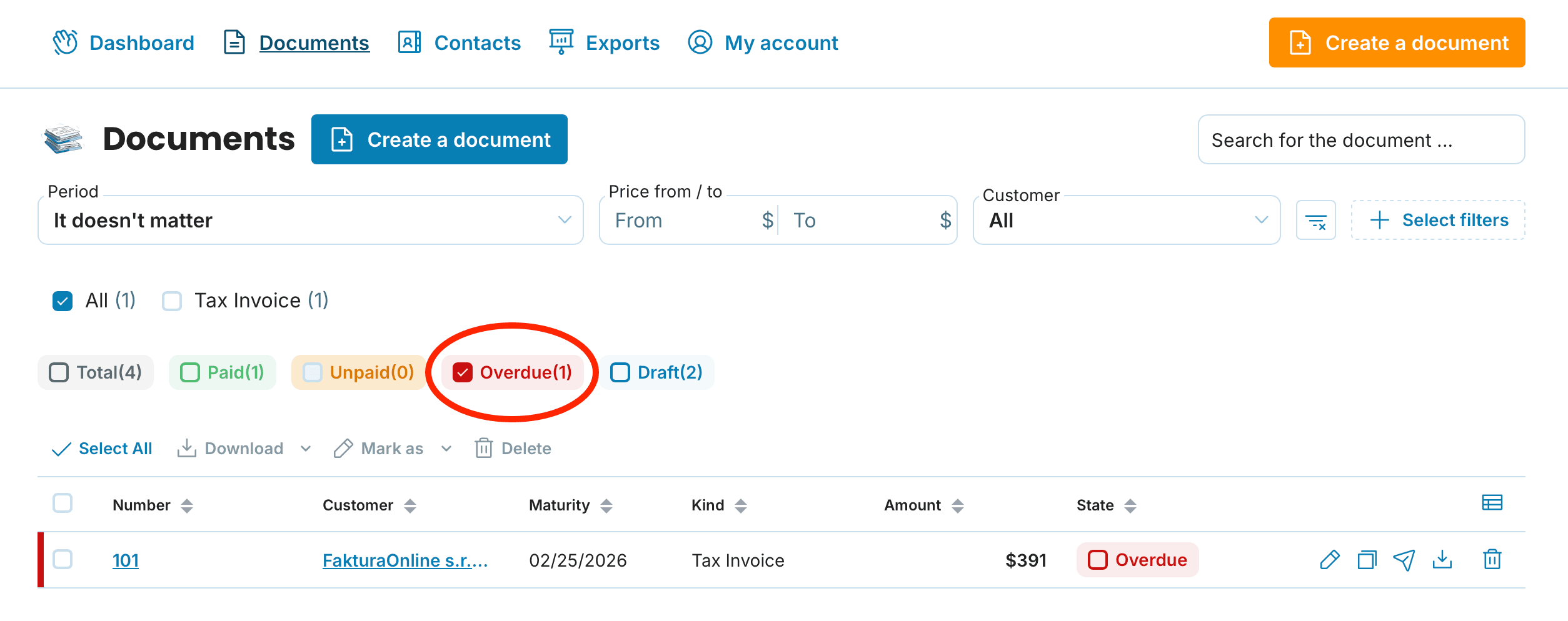
When an invoice is past due, you can send a reminder straight from the app. A ready-made template is available, so you just fill it in and send instead of writing the reminder from scratch every time.
How to do it:
Next to the invoice, click the send icon.

A reminder window opens—fill in the recipient and edit the text if you like.
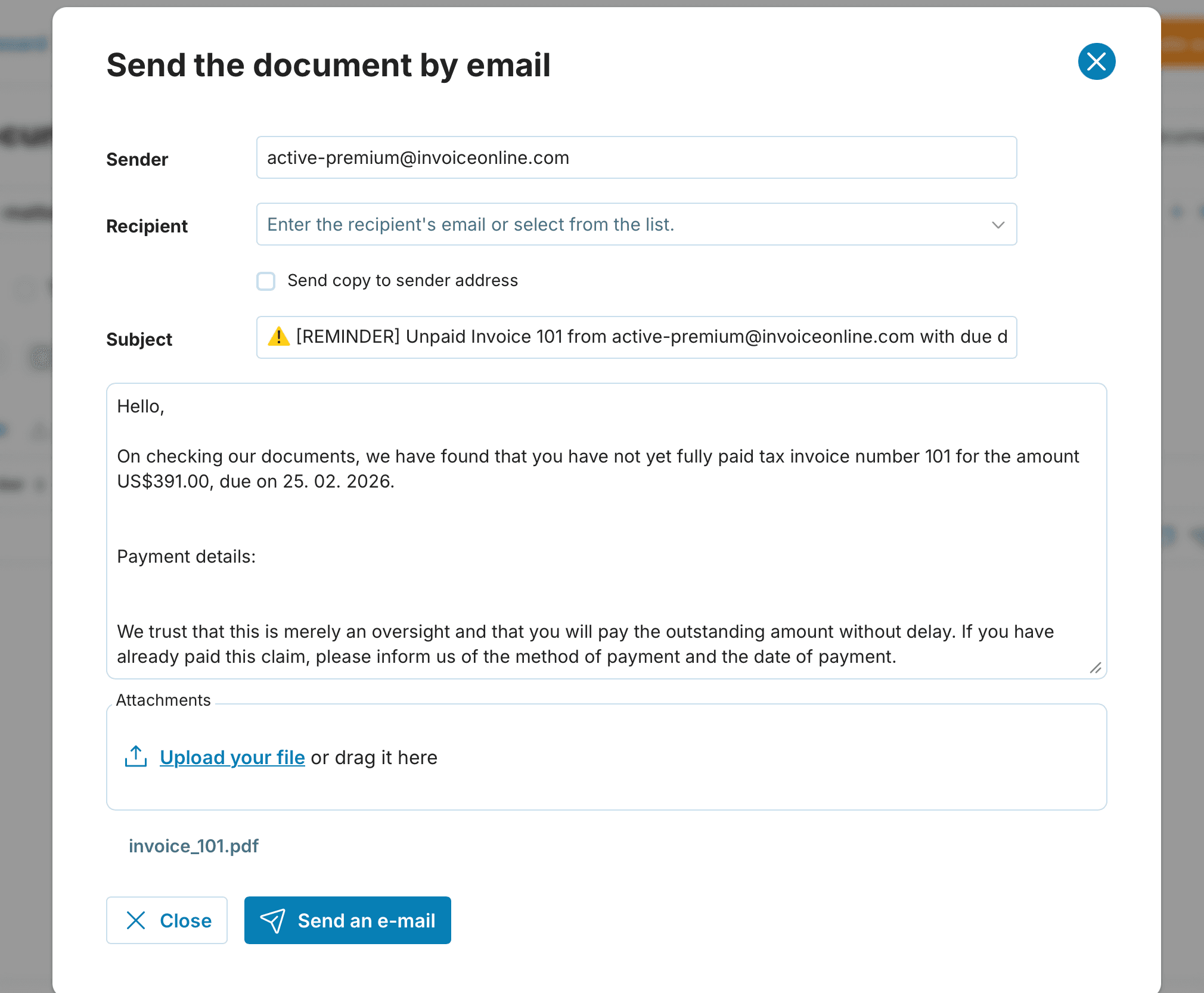
Send the reminder with the Send email button.
Prevent problems before they start
You set the due date on each invoice yourself, based on what you agreed with the client. And to put your late-payment terms in writing, use the notes field when you create the invoice—you can add, for example, that overdue payments are subject to a late fee or interest. The client sees it right on the invoice, your terms are documented from day one, and a second reminder won't catch anyone off guard.

How to create your own email templates (including reminders)
When is an invoice officially past due?
The day after the due date, if payment hasn't arrived. If you didn't set a due date, "Net 30" is a common default—but in the US there's no automatic statutory term, so always state your terms up front.
Can I charge a late fee if it wasn't on the invoice or in the contract?
Usually not in a way you can enforce. In the US, late fees and interest generally apply only if the client agreed to them in advance. Put the policy in your contract and on every invoice.
How much can I charge in late fees?
It depends on your state's usury laws. A common rate is 1.5% per month (about 18% a year), but caps vary and some states are lower. Check your state before setting a rate.
Is there an automatic penalty like in the EU?
No. Unlike the EU, US law has no automatic late-payment interest or fixed recovery fee. Your rights come from your contract terms and your state's laws.
How long do I have to collect an unpaid invoice?
The statute of limitations varies by state, commonly three to six years from the due date for a written contract. After it runs out, you generally can't enforce the debt in court.
What are my options if the client still won't pay?
Send reminders, then a formal demand letter. If that fails, you can use a collection agency, sell the invoice to a factoring company, or file in small claims court (limits vary by state).
